














 Radio
Radio




 Url copied to clipboard.

We did not have long to wait to find out what sort of an impact Frankel would make as a sire. The most highly-rated Flat racehorse in Timeform’s history – at 147 – had unknowingly set himself an almost impossibly high standard to live up to. But, no more than a few months in, the signs are that he may make nearly as big a splash in the breeding shed as he did once on the racecourse.
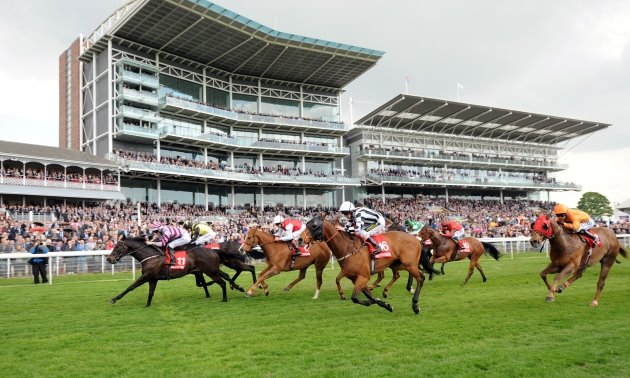
York was the scene of one of his greatest wins, of course, when he whipped top-notchers Farhh and St Nicholas Abbey in the International Stakes in 2012, and it is now the scene of his biggest success as a stallion (though, for how long, one wonders).
His unbeaten juvenile filly Fair Eva started long odds-on for the Group 2 Sky Bet Lowther Stakes on the second day of the Yorkshire Ebor Festival. And finished only third.
But Frankel and failure have been unnatural bedfellows from the start, and there was almost something inevitable in the fact that he provided the winner instead with the less considered Queen Kindly.
Nonetheless, how did it happen that Fair Eva – so impressive in two wins out of two that she was already a short-priced favourite for next year’s 1000 Guineas – was beaten? Time analysis offers few answers, in this case, other than to identify that Queen Kindly and the runner-up Roly Poly almost certainly achieved a lot more than might have been expected (and than might still be appreciated).
The overall time of the Lowther was well up to scratch: indeed, it was the third-fastest Lowther of this century. It was also a healthy 0.59s quicker (3.5 lengths if using the official conversion, though in truth probably a little more) than the valuable sales race which opened the card.
Sectionals show that the race was truly-run: indeed, the early leaders may have done a fraction more than was ideal, as the following breakdown illustrates:

Those all-important finishing speeds are all below the course-and-distance par of 100.7% (the speed of the closing sectional as a % of the horse’s average speed for the race overall), but the difference is negligible where Queen Kindly is concerned. The field was tightly bunched at halfway, but, for what it is worth, Queen Kindly was fractionally the back marker at that juncture.
There are no obvious sectional excuses for Fair Eva, though both times and sectionals identified her as better than this (she got a 114 sectional rating) when she won the Princess Margaret Stakes over Ascot’s stiffer 6f.
We will probably hear plenty more of all the first three (not least Roly Poly, who carried a 3 lb penalty and promises to stay a mile), though it has to be said that the recent roll of honour of this race does not make especially good reading. The historical average Timeform rating for winners of this race is 110 to 111, and times and sectionals suggest that Queen Kindly is at least that good.
The historical standard for winners of the Darley Yorkshire Oaks is 121, and there are reasons to believe that this year’s winner, Seventh Heaven, is that good as well.
On the face of it, it might be imagined that Seventh Heaven benefited from a pace collapse, for she went from being a few lengths down and pushed along three furlongs out to forging clear with her rivals strung out by the line.
However, sectionals show that she finished quicker than par, and that it was only those who finished sixth and worse who were slowing in absolute and not just relative terms:

Consideration of TurfTrax’s by-furlong sectionals also confirm that the pace was not overly strong early: Seventh Heaven actually ran a bit slower for most of the way than Tapestry did in winning in 2014 in an overall time which was 0.09s slower.
Seventh Heaven had done something remarkably similar when winning the Irish Oaks at the Curragh on her previous start, coming from off the pace to win by the same margin of two and three quarter lengths. She stays 12f very well – and may require a decent pace at the trip – but that is not to say that she is slow.
Some of her rivals looked non-stayers, while others seemed simply to have off days, but it is worth persevering with third-placed Queen’s Trust, who travelled notably well for a long way. Neither her Ribblesdale fourth (in which she got a poor ride) nor her Nassau second were run at a pace like this, and it seemed to find her out at this longer trip late in the day.
Both the above races were won in times indicative of ground that is good to firm, if not firmer. That was not quite as clear with some other races, but they were not all evenly-run.

In particular, the Sir Henry Cecil Galtres Stakes won by Abingdon was a steady-fast affair which favoured those with a turn of foot (as reflected in that high finishing speed % for the race overall).
The runners in the 8f handicap got strung out over many lengths by halfway, but sectionals suggest that the place to be was towards the front of the main pack – which is where the winner Firmament was to be found – and not even further in arrears.
In that respect, runner-up Mustashry can be considered to have done remarkably well, with sectional upgrades having him best in this by at least a couple of lengths. He can make amends in a big handicap at 8f/10f, but his future surely lies in Group races. Fourth-placed Spark Plug also looks back to his best.
Sectionals also show that the pace was generous in that opening Sales Race, and that it would be a mistake to mark up late closers by a lot, even though the winner Stormy Clouds all but led at halfway.


.jpg&w=300)
.png&w=300)