














 Radio
Radio




 Url copied to clipboard.

Whether or not it really was a “Duel On The Downs”, today’s Qatar-sponsored Sussex Stakes at Goodwood constituted a “Jewel On The Downs”: it was a race that was high-class and gripping from start to finish.
A “duel” is meant to involve just two protagonists, and that is how this contest was billed, with the one-two from the St James’s Palace Stakes at Royal Ascot – Galileo Gold and The Gurkha – crossing swords again. But a third protagonist in Ribchester nearly stole the show and could be the one above all others to take out of the contest.
The Gurkha had been unlucky at Royal Ascot, at least judged on sectionals, set too much to do in a falsely-run race, and he was the one the market wanted to know beforehand.
But Galileo Gold again threatened to get the run of the race, able to set fairly soft early fractions, yet with the crucial difference that The Gurkha sat on his tail this time.
The pace increased markedly after halfway, as the sectionals show, but The Gurkha covered Galileo Gold’s every move and took dead aim after a gap finally opened as Awtaad faded away in the penultimate furlong.
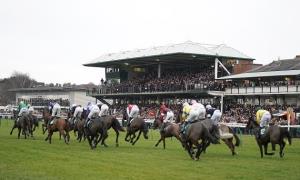
The Gurkha came alongside and then edged past gutsily to win by a neck, but both he and Galileo Gold were nearly caught by Ribchester, who had raced a few lengths further back and who finished with a flourish. A summary of the individual sectionals are as follows:

Goodwood is a turning track, at which much of the closing stages is slightly downhill, and the par finishing speed (a horse’s late speed as a % of its average speed for the race overall) at a mile is over 100%, but not greatly so. There is also a slight rise in the final furlong, which has caught out more than a few over the years.
Nonetheless, all of the individual finishing speed %s in this year’s Sussex Stakes were quicker than optimum. It was a rather tactical affair, in which a prominent position should have been something of an advantage, all other things being equal.
In that context, some of the beaten horses can be considered to have shaped better than the result, with Ribchester the one who finished close enough that it might have made a material difference to the result.
Sectional upgrading results from the difference between the optimum finishing speed % and the actual finishing speed %s recorded by the individual runners, and it increases exponentially the more inefficiently a horse performs (in line with the methodology expounded in Sectional Timing, An Introduction by Timeform).
Thus it is that Ribchester gets a larger mark-up than the two who beat him, which, given that he was beaten only a neck and a short head, makes him fractionally the best horse in the race (by about a head). Lightning Spear, who was set the most to do, and Toormore get even bigger upgrades but were still some way in arrears come the line.
All form should be viewed in context, of course. Horses progress and regress, and different circumstances can suit them better or worse. But on this showing the hoped-for rematch between The Gurkha and Galileo Gold should also involve Ribchester.
In a wider context, those who fought out the finish of this year’s Sussex Stakes are very smart performers but possibly not quite out of the top drawer. The first two’s tasks were made slightly easier by the unenterprising tactics on their rivals, and yet they did not stamp their authority in the way that some of the best winners of this great race had done.
The overall time of the Sussex Stakes was not all that good, in part down to the inefficient manner in which it was run. But later races showed that the surface was not greatly different to the opening day, despite selective watering. That is, it was probably just on the faster side of good.
Those times, and the finishing speed %s for the races themselves (that is, taking the leader at the sectional and the leader/winner at the line), are as follows, along with the projected sectional ratings for the individual race winners:

Optimum finishing speeds vary by distance, and those recorded by Star Rider, Perfect Angel and Shady McCoy (the last-named coming from some way back) were close to par. Yalta’s finish was pretty quick, even for a smart 5f juvenile, but Ulysses’ was easily quickest of all in a relative sense.
This year’s Beringice Gordon Stakes – the race that Ulysses won – was a notably falsely-run affair, in which the winner and the fourth (Qatari Hunter) ran most inefficiently and got the biggest upgrades. That pair undoubtedly did well, but there are likely to be plenty of more trustworthy pieces of form on show during the week.
What the Gordon Stakes did not test greatly, with future challenges in mind, was stamina. Ulysses’ and Qatari Hunter’s last-3f times were almost identical to The Gurkha’s at half a mile shorter soon after. That is quite something when you think about it!


.jpg&w=300)
.png&w=300)