














 Radio
Radio




 Url copied to clipboard.

Facts and evidence seem to have fallen out of fashion in wider society of late, but anyone ignoring them in horseracing and betting is likely to pay for the privilege through their pocket.
The interpretation of facts and evidence can be a much trickier matter, admittedly. But if, for instance, you were to maintain that Horse B beat Horse A, when the truth was that Horse A beat Horse B – which is the kind of thing that goes on all the time in the world of politics – you would be most unlikely to turn a profit for long.
So, establishing the evidence of what happened in a race should be a given, even if interpreting that evidence allows for greater disagreement.
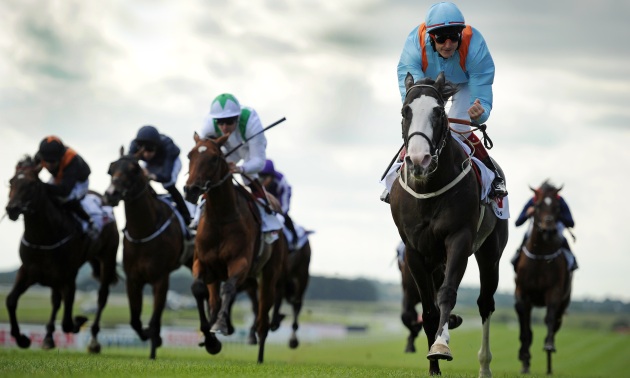
The Irish Derby at the Curragh at the weekend is a case in point. Various commentators can be relied upon to write and say the right words to reflect the significance of the occasion and the admirable victory in it of Harzand. But analysts have an obligation to deal with facts and to consider what those facts signify.
You may have read that the 2016 Irish Derby was “a true test”. It was not.
Sectional times show that, despite a pacemaker for Harzand, the pace was far from strong and that the last three furlongs were notably fast. It made for a very different test to that experienced in a very strongly-run Derby at Epsom, and Harzand came through it with flying colours again.

Those finishing speed %s are for the race itself, derived from the time lapse for the leader at the sectional to the leader (that is, the winner) at the line, and expressed as the speed of the closing stages compared to the average speed for the race overall.
The higher the finishing speed %, the faster was the finish in relative terms. By implication, the faster the finish in relative terms, the slower was the part of the race which preceded that finish, again in relative terms.
This year’s Irish Derby, like last year’s Irish Derby, tested late speed more than stamina, whereas the three Irish Derbys which immediately preceded the last two were much truer affairs.
Trading Leather’s 2013 victory – which came in one of the fastest times ever in the race – was closest to par for the course and distance, that par having been established from a multitude of races and not just the Irish Derby in isolation.
Those are the headline figures, but individual horses will have run in individual ways, so it is necessary to calculate the overall, sectional times and finishing speed %s for each runner.

Those sectional upgrades are derived from the difference between each horse’s finishing speed % and the aforementioned course-and-distance par. The further from par a horse has strayed, the more inefficiently it has performed and the greater its sectional mark-up (all of this is described in detail in Sectional Timing: An Introduction by Timeform).
The facts include that Idaho and Red Verdon ran more quickly late on than did Harzand, in a race which was not a true test. In that respect at least, Harzand may have benefited from a position nearer to the front.
That is as judged by the last three furlongs alone, however: another fact – not shown in the figures above – is that, having been joined by Idaho around a furlong out, Harzand drew on again to score by half a length. The sectionals for that final furlong (if we had them) would tell a slightly different story.
Nonetheless, this year’s Irish Derby was a rather false affair – something which is reflected in the slowness of that overall time also – and that needs to be borne in mind when considering things like the proximity of 33/1-shot Stellar Mass in third and the late headway made by the valid St Leger candidate Red Verdon in fourth.
Strictly speaking, Idaho comes out marginally better than Harzand on last-3f sectionals in this instance, but it had been the other way round at Epsom, where Idaho got a decent mark-up for racing quite close to that very strong pace, if not enough to take him ahead of Harzand (whose sectional rating of 124 compared to Idaho’s 121).
Another way of looking at the evidence is that Harzand showed here that he is not “just” a staying Derby winner who needs a strong pace and softish ground: he can win at the top level on good going and when speed is tested. But it must have helped that he was well-positioned when it mattered.
Death and taxes no longer seem quite the certainties they once were, but it seems as if you can still rely on Minding to give her running, whatever the distance, whatever the race set-up and whatever the opposition.
She was at it again at the Curragh on Sunday in the Sea The Stars Pretty Polly Stakes, in which she dismissed a quartet of smart four-year-old fillies with little fuss by four and a half lengths and more.

The sectionals show that this was another falsely-run race, with Bocca Baciata getting a soft lead and Minding showing a smart turn of foot to come from several lengths back on ground that seemed to be around a stone slower than on Saturday following overnight rain.
Hers was not the fastest closing sectional on the card, however, with Sir Isaac Newton (named after a man who certainly understood the importance of evidence) managing to break 34.0s in winning the Group 3 International Stakes over the same ten-furlong distance earlier on the card.
Sectional ratings are a function of upgrades for inefficiency and the horses’ existing overall times. Sir Isaac Newton ran even faster than Minding late on, but Minding ran 2.31s faster overall and should be considered the superior horse (if not by as much as that overall time difference might imply).
Individual horse sectionals, finishing speed %s and sectional upgrades exist in Timeform’s Sectional Archive for all horses which ran over the three days of the Irish Derby Meeting, as well as for the vast majority of other performances – on the Flat and over jumps, in Britain and in Ireland – this year.


.jpg&w=300)
.png&w=300)