














 Radio
Radio




 Url copied to clipboard.

An event as keenly anticipated as the QIPCO-backed 2016 British Champions Day at Ascot sometimes falls short of expectations. But if that was your verdict on Saturday’s proceedings then you must be ridiculously difficult to please.
Numerous high-class performers turned up for British Flat racing’s end-of-season finale. Not all of them delivered the goods – for that is racing – but enough of them did to make the occasion thoroughly memorable.
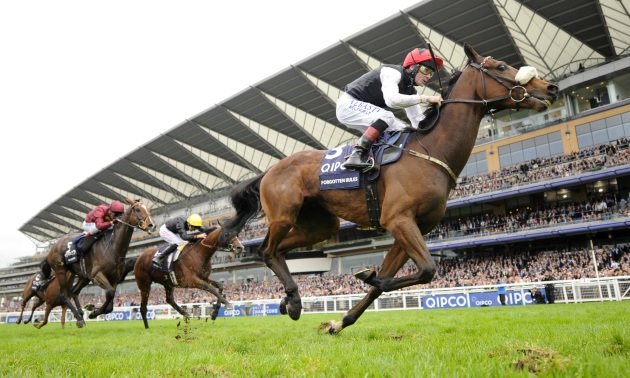
In particular, the brilliant French-trained colt Almanzor took the Champion Stakes itself and the only slightly less outstanding Irish-trained filly Minding took the Queen Elizabeth II Stakes, both with performances from out of the top drawer.
Those two were favourites, and firmly deserve the accolade of “Champions”, but other results were less predictable – and, in some cases, more questionable – to remind everyone that garnering such an honour is not the formality it can sometimes appear.
Others will analyse events in various ways, but this Debrief will look at both the horses’ overall times and how they were arrived at – their sectionals, that is – to make sense of what went on. Horses may come and go, and be considered more or less worthy, but the test of time remains more or less constant and provides a benchmark against which performance can be measured.
First, though, a word on the going, which the times suggested were faster than the “good” officially returned. The going stick reading of 8.9 on the straight course indicated a quicker surface than on any other occasion at the track this year besides the two-day King George meeting in July.
No course records were broken, but a couple of race records for Champions Day itself were established. “Good to firm” seems a more accurate description, on both the straight and the round course.
Events kicked off with the Long Distance Cup, for which the first-six sectional information is as follows.

The commentator reported the race as being run at a reasonable gallop early on, but those sectionals clearly show that speed and positioning were at a premium when it mattered. Those finishing speed %s (the last 3f speed compared to the average speed for the race overall) are all very high, denoting a sprint finish in relative terms.
The best place to be, all other things being equal, was near the front, which is where Quest For More (second turning in) and Sheikhzayedroad (third turning in) were. The worst place to be, all other things being equal, was towards the back, which is where the odds-on Order of St George (seventh turning in) was.
Order of St George made only marginal gains from that point, but he was running against a pace bias, and that upgrade (derived from the difference between a horse’s finishing speed % and the par for the course and distance) has him best in the race.
Order of St George had put up arguably his two most impressive efforts in races which produced good timefigures (last year’s Irish St Leger and this year’s Arc), and this race very definitely did not. Ryan Moore is undoubtedly a brilliant jockey, but he is also human.

The Sprint was a far fairer test in terms of pace, though it was at least possible that racing towards the far side – as The Tin Man did – helped somewhat.
Those finishing speed %s are close to par (though Signs of Blessing paid slightly for forcing the gallop), and only Growl broke 24.0s for the last 2f, when Muhaarar (23.83s), Twilight Son and Danzeno had all managed to do so 12 months earlier on easier ground, in a race in which The Tin Man had been fourth.
The result looks a fair enough one on the day, though some of the also-rans (notably Quiet Reflection and Mecca’s Angel) failed to give their running. This is very smart form, but does not compare with Muhaarar’s effort in 2015.

Sectionals show that late speed was favoured over stamina in the Fillies & Mares, but that the four-length winner, Journey – who raced close up before striking for home approaching the final furlong – was still clearly the best. She was faster than all bar Queen’s Trust from the turn, and faster in that sectional than any previous winner of this contest.
Queen’s Trust remains a filly with some potential, having run into Minding (of whom, more anon) in the Nassau Stakes at Goodwood then shaped well for a long way in a more stamina-sapping Yorkshire Oaks at York.
This was another race in which a couple of leading contenders – Seventh Heaven and Zhukova (unproven at this level on ground firmer than good) – failed to fire, but there should be no doubting that Journey is pretty good.

Whatever Minding lacks in raw ability compared to some of the greats of recent years – and that is not a lot – she certainly makes up for in toughness and versatility. This was her fifth Group 1 win of a season which started on the first of May, and they have come at distances between a mile and a mile and a half, and on ground from soft through to good to firm.
Given her proven stamina, a prominent ride made sense, and she never looked back after going on with a quarter of a mile still to race. Indeed, she probably paid a little for such a bold move in the final furlong, which she appeared to run in about 12.85s (a slow 95.8% finishing speed).
Minding is the fastest winner of the Queen Elizabeth II Stakes since it became part of British Champions Day, faster by nearly a second than Frankel on similar ground in 2011 (though he was 0.17s quicker than her for the sectional).
The suspicion had been for a while that the classic miling colts were good, but not great, and this seemed to confirm that, with Ribchester doing best of them. Galileo Gold and Awtaad did race away from the far-side action, however.

Minding had, of course, finished third to Almanzor and Found in the Irish Champion Stakes at Leopardstown in September, and just how strong that form is was underlined in the British equivalent.
There is no doubt that Saturday’s race tested speed – look at those high finishing speed %s – nor that Almanzor was, hands down, the best horse in the race. Indeed, he has claims to be considered the best active horse in the world (fans of US star California Chrome, in particular, may disagree).
That 34.44s last 3f has been bettered only once at Ascot this year (in a steadily-run 5f race), according to Timeform’s comprehensive Sectional Archive, and is fully 1.42s quicker (nearly 10 lengths) than Cirrus des Aigles ran when breaking the track record in this race in 2011.
Other runners in this year’s Champion Stakes also finished quickly, but Almanzor was as hot as Dijon mustard. I have his final 1f at about 12.0s flat, which even those contesting the earlier Sprint might struggle to match. Steady pace (as here) or strong pace (as in Ireland), Almanzor can put in a blistering run just when it is needed.
Found lost no caste in defeat once again, while Jack Hobbs ran a race of great promise given his long absence through injury and the fact that he is at least as good at 12f as at this 10f.

The Balmoral Handicap was run in a time 1.17s slower than the Queen Elizabeth II Stakes, which reflects fairly well on the latter race, though those finishing speed %s show that the handicap was not run at an end-to-end gallop.
It also added substance to the idea that the far side was the best place to be on the straight course, the winner drawn 1 though drifting across late on. There were no real hard-luck stories in terms of sectionals, but backers of third-placed Firmament and seventh-placed Morando are entitled to wonder what might have been had things unfolded differently.


.jpg&w=300)
.png&w=300)