














 Radio
Radio




 Url copied to clipboard.

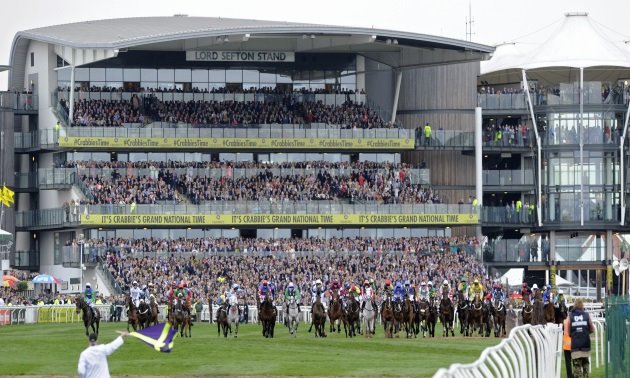
As a race, and as a spectacle, the 2016 Crabbie's Grand National has to go down as one of the best. Quality runners – even after allowing for the creeping rise in official ratings – plenty in with a shout until late on, and a classy and deserving winner in Rule The World, all went towards a pleasing outcome.
The lack of fatalities in the race, for the fourth year out of four since modifications were made to the Grand National fences, should also be a source of pleasure, though not of complacency.
And even the bookmakers joined in by not using the opportunity to rip off Starting Price punters quite so much, with an over-round of 148.7%: the second-lowest in the race this decade.
The winner’s time was the slowest in the race since Mon Mome in 2009, and that despite the distance having been reduced by 110 yards prior to 2013. That is in very large part down to ground that was soft to begin with and softened further by rain subsequently.
The Grand National is unique in many respects, including being the only race run over the course on the day, which makes time comparisons difficult.
However, we do have fence-by-fence sectionals at the Grand National over many years, and these suggest that this year’s race was close to par for the first circuit but steadied somewhat thereafter, leading to a fairly fast finish (at least for those still in contention) given the conditions.
Rule The World ran from three out – which he jumped a few lengths down on The Last Samuri – in 96.5s, which is fractionally quicker than Many Clouds had run 12 months earlier on less testing ground, as well as being faster than Auroras Encore and the aforementioned Mon Mome (by more than 5 seconds) among recent winners.
When a horse goes on to score by six lengths and eight in such circumstances, there is little reason to gainsay the result, though backers of third-placed Vics Canvas are likely to wonder what might have happened had the horse not almost come down at first Becher’s.
So, to a sizeable degree, what you saw was what you got in the Grand National, at least from a timing point of view, which fortunately gives us more opportunity to consider some very special time performances away from the main event over the three days.
The headline figures for the races themselves include from-three-out sectionals and finishing speed %s for the leader at that point and the leader (i.e. the winner) at the line – what is known as the “race sectional” – with sectional distances for portable hurdles being estimated anew on each day.

Those finishing speed %s indicate how quickly compared to the average race speed the finishes of races were: if a figure on a level course like Aintree is much over 100% it indicates a fast finish; much under 100% indicates a slow finish (though this will be affected by amendments to overall race distances and wind).
It can be seen that the finishing speed %s on the opening day were fairly slow (with the exception of the one race on the Grand National Course), and that stamina more than speed was tested in relative terms.
Those timefigures also point to Apple’s Jade and Annie Power achieved more here than they did at Cheltenham (which is not quite a unanimous view), and that Cue Card achieved a high level of performance yet again, this despite all three winners being unpressured in the closing stages.
Apple’s Jade and the bumper winner Kayf Grace recorded near-identical times, when the presence of obstacles for the former will have slowed her down by several seconds. That one-on-one comparison suggests Apple’s Jade is bordering on high-class already, for all that her main rivals probably failed to run near their best.
The same summary applies to Annie Power, with the exception of the word “borderline”. On this showing – in which two and a half miles and soft going may have been close to perfect conditions for her – she is one of the best hurdlers the modern era has seen when in receipt of her sex allowance.

Friday saw a good time for a revitalised staying novice chaser in Native River and a slightly underwhelming one – given the race’s status – for God’s Own in the Melling Chase. It is difficult to imagine that Vautour (who already has a 174 timefigure to his name this season) would not have won the latter race with ease had he stood up.
That slow finish for the Ballyoptic race meant that some of those behind, such as fourth-placed Balko des Flos, shaped better than the result. The bumper time by Bacardys is decent, but seems to confirm that none of those to contest the Championship races at Cheltenham and Aintree is head and shoulders above its rivals.

Which brings us to the rest of the Saturday card and a performance that had even wizened racing enthusiasts struggling for appropriate superlatives.
That win by Douvan in Maghull Novices’ Chase was something else, as this massively talented youngster sat behind a strong pace before breezing past going to three out and then seeing off the brief challenge of the smart The Game Changer, who came from further back.
Douvan’s 171 timefigure is truly exceptional for a novice, let alone for a novice who has not yet been fully extended. And – here’s a thing – Douvan managed to run from three out around a dozen lengths quicker than any other chaser on the Mildmay Course in the week.
His race was run at a shorter distance than the others, but it came on slightly softer ground than most of them, and it came at the end of a race in which a useful horse had tried to pile on the pressure from the outset. It all came so easily to Douvan: has jumps racing found its own Frankel?!
This was not the only performance of high merit on the card. Thistlecrack looks almost as unbeatable among staying hurdlers as Douvan does against novice chasers, though it has to be admitted that the former’s rivals are not a vintage bunch.
A truly-run race failed to fluster Thistlecrack in the slightest at Cheltenham, and a steadily-run one here had the same thoroughly one-sided outcome.
That 139 timefigure as a result is nowhere near the 172 that Thistlecrack achieved at Cheltenham. But, on the other hand, that closing 44.4s sectional was comfortably the fastest by a hurdler over the three days after allowance is made for a minor adjustment to the positioning of the third-last flight.
Douvan did it over the shortest distance of all, but Thistlecrack did it over very nearly the longest, and with the same sort of ease. What a couple of back-to-back performances!
Jumps racing this season has sometimes seemed very one-sided, but it has never seemed dull. How could it possibly be with horses like Douvan and Thistlecrack (and Cue Card, Annie Power, Vautour, Don Cossack, Faugheen and Sprinter Sacre) around?!
Get Timeform Sectional Archives, covering every horse in most Flat races and all jumps races.


.jpg&w=300)
.png&w=300)