














 Radio
Radio




 Url copied to clipboard.

The analysis of jockeys can descend into binary, black or white, yay or nay thinking, and often on the basis of performance in a single race – a winning ride sees the jockey given the nod of approval, while a losing ride induces gentle tutting (reactions can sometimes be stronger!).
Race analysis, however, should never be this simple or emotional. Horse racing is a complex sport and, although a jockey may give a horse a fine ride or, indeed, a poor one, the more rational way to assess their ability is to look at their entire body of work.
Aside from the jockey’s strike rate, profit & loss or actual over expected and impact values, it is also important to try to understand their riding style.
Since late 2012, Timeform’s team of race reporters have been recording Early Position Figures (EPFs) for every runner in every race. Recorded at the same or similar point in each race, EPFs are another piece of data that can be used to assess not only the horses, but jockeys, too, as they can be used to build up a riding style profile.
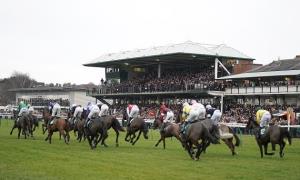
All other things being equal, the best place to be in the early part of a race is either in front or at least to be prominent (an EPF of 1 or 2). The further back in the field, the more a hostage to fortune the jockey becomes as they battle against others who are all trying to maximise their horse’s chance of crossing the finish line first.
If asked which jockey records the highest proportion of EPF 5s, I suspect most would only require one guess. With 24.7% of rides recording an EPF of 5 and a further 24.8% recording a 4 there is no doubt that Jamie Spencer has a preferred style of riding.
Such waiting tactics can often look spectacular and cause commentators to declare a “Spencer Special”, but there are also occasions where his horses are left with too much to do. Judged individually, the rides are either superb or stubborn, when the truth is more than likely somewhere inbetween.
It may be a bit more surprising to hear that Spencer's percentage is slightly above average for front-running rides, while rides for which he records an EPF of 2 or 3, prominent to mid-field, are well below average.
One jockey who is quite different to Spencer is Richard Kingscote.
Kingscote is usually to be found towards the front end of races he’s in, with 21.7% of his rides recording an EPF of 1 and 33.1% an EPF of 2, both of which are higher than the average jockey. Both Spencer and Kingscote clearly have a preferred riding style, but the difference is that one style is probably more advantaged than the other.
The riding styles of Spencer and Kingscote are visualised below in the form of a radar which represents Timeform EPFs. Ryan Moore and Ted Durcan are also plotted, along with the “average” jockey profile (in grey). Ted Durcan is similar to Spencer in that he tends to hold his horses up but, unlike Spencer, he is almost allergic to front running, a tiny proportion (4.7%) of his rides recording EPFs of 1. The Ryan Moore radar shows a remarkably average riding style distribution, perhaps representative of his ability to react better to developing circumstances than some others.

Further to understanding a jockey’s riding style, we can begin to look at how they perform on horses with different pre-race expectations. The plot below shows the performance of our four jockeys when riding a horse that is predicted to record an EPF 1 (top plot) and an EPF 5.
When Kingscote rides a horse with a pre-race predicted EPF of 1, he goes on to record a race performance EPF of 1 37.70% of the time, compared to Durcan who will record an EPF 1 just 11.4% of the time. Moore and Spencer are somewhere between the two, with Spencer slightly more likely to lead if he’s sat on a potential front runner than Moore. Durcan is more likely to record an EPF of 2 than Spencer who, as shown in the radar above, usually takes a more polarised view (front run or sit behind).
Looking at the performance of the four jockeys on horses predicted to record an EPF of 5, we see Spencer is the most likely jockey to do this, with 35.3% of rides. Kingscote, however, could actually be expected to lead just over 10% of the time on such horses and is far more likely to record EPFs of 2, 3, or 4 than he is a 5.

Fans, analysts and punters alike should be looking at races aware not only of who is riding their horse, but also where that jockey is likely to position their horse. Hopefully, this article has gone some of the way to helping show how useful that information can be and, in the coming weeks and months, some of the data showcased here will be added to Timeform products.

.jpg&w=300)
.png&w=300)