














 Radio
Radio




 Url copied to clipboard.

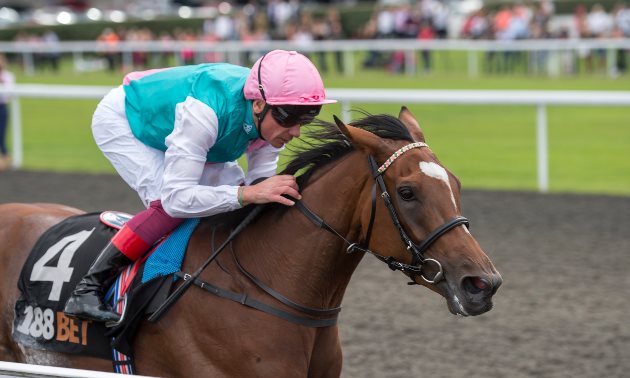
Having created history in becoming the first Arc winner to complete a Transatlantic double at the Breeders’ Cup last November – going where some legendary names couldn’t in the process – it would have been reasonable to expect that time would have been called on Enable’s glittering career and she would be whisked off to the breeding shed, something which perhaps would have been inevitable had she have been of the opposite sex.
However, there still seems to be a sense of unfinished business with Enable, considering that injury ruled her out of a large part of last season, and the carrot of becoming the first ever three-time Arc winner remains – a feat which has only ever been attempted by one dual Arc winner in the past, Treve, who ultimately finished fourth behind Golden Horn in 2015.
Indeed, an injury setback meant that we had to wait until the 8th September to see Enable return to the track, when she took advantage of favourable terms to defy a 342-day absence and defeat Crystal Ocean in the Group 3 September Stakes at Kempton by three and a half lengths, seeing off a rival who had finished a very narrow second in the King George VI Stakes on his previous outing.
Enable would of course build on that by becoming just the eighth dual winner of the Arc, despite not being one hundred percent on the day after a minor setback in the run-up, and having created further history at Churchill Downs, attentions now turn towards the pursuit of Arc win number three – and the opportunity of another unprecedented feat to add to her collection.
She’s done it again! Willing and Enable ❤
— Racing TV (@RacingTV) October 7, 2018
🐎 2018 Arc 🏆
🐎 2017 Arc 🏆
🐎 2017 Yorkshire Oaks 🏆
🐎 2017 King George 🏆
🐎 2017 Irish Oaks 🏆
🐎 2017 Oaks 🏆
Prize money won: £6,377,473
Value: Priceless
6th #Arc win for Frankie Dettori
3rd for John Gosden. #QPAT pic.twitter.com/0UtCk6sITq
Plotting a path to Longchamp
Considering that Enable’s entire five-year-old season is centred around her Arc bid, it is natural to expect some caution from her connections in the lead-up, with both John Gosden and Teddy Grimthorpe, Khalid Abdullah’s racing manager, expressing an eagerness not to bring her out too early – something they alluded to when ruling out a return in last month’s Coronation Cup at Epsom.
Plans were quickly changed to begin with a run at Royal Ascot, in either the Prince of Wales’s Stakes (over 1 ¼m) or in the slightly less daunting Group 2 Hardwicke Stakes (over 1 ½m), though her return was once again delayed in favour of a later target, having failed to convince that she was one hundred percent ready for a run in a piece of work in Newmarket at the end of May.
It means that the blueprint to Arc win number three will now almost certainly start in July at the highest level possible, in either Saturday’s Coral-Eclipse at Sandown or in the King George VI Stakes at Ascot three weeks later – very much throwing her into the deep end for her first run back. It creates an interesting conundrum for her connections, as they will undoubtedly be keen to extend their mare’s current nine-race unbeaten run, but in waiting until July to reappear means that she could find herself with a far stiffer task on her hands than she could have done if returning earlier in the season.
Why is a July return so tough?
Alongside the prospect of facing high-class, race-fit rivals, the Eclipse and the King George hold a unique significance in the European racing calendar, in that they provide the first of just six opportunities for the Classic colts to take on their elders over middle distances during the season. Two of the remaining four are also in Britain, the International Stakes at York and the Champion Stakes at Ascot, while France and Ireland have just one race each, in the form of the Arc at Longchamp and the Irish Champion Stakes at the Curragh. These races are also open to the Classic fillies, though other female-only races, such as last Friday’s Pretty Polly Stakes at the Curragh and next month’s Falmouth Stakes at Newmarket are also options for them.
The races use the weight-for-age allowance system, which is designed to level the playing field by accounting for three-year-olds’ lack of physical maturity, and decreases as the year rolls on. However, the scale is based on the development of an ‘average’ racehorse, meaning particularly forward types could find themselves on advantageous terms in the Eclipse - shown by the fact that three of the last four renewals have been won by three-year-olds.
Roaring Lion has given his trainer John Gosden a third win in the Group 1 Coral Eclipse as the son of Kitten’s Joy confirms Derby form with Saxon Warrior pic.twitter.com/BChyRBdvzp
— Racing TV (@RacingTV) July 7, 2018
What the figures say
The difficulty of reappearing in a Group 1 contest is highlighted by the numbers, and only 166 horses have done so (after an absence of 200 days or more) over the last ten seasons. Of those, 12 have won, with five being three-year-olds and seven being aged four or older. The vast majority of those did so in May or June (156 runners, 11 winners), in races which are perhaps seen as more traditional starting points for the season.

Indeed, 89 of the 166 were three-year-olds, and 73 of those made their reappearance in a Classic race – something which has become particularly common of late – with all five victories coming in either the 1000 or the 2000 Guineas at Newmarket. It’s a similar story with the older horses, too, and 29 of those aged four or older had their first start of the season in the Lockinge Stakes at Newbury, a race which produced four winners. The remaining two winners from May and June both came from Royal Ascot, in the Queen Anne Stakes and the Prince of Wales’s Stakes.
The numbers point towards a clear preference from trainers when it comes to pinpointing an opening target for the season, and suggests that Group 1 targets seemingly become more unpreferable a choice as the year rolls on – something shown by the fact that just 10 horses have reappeared at this level in July or later over the last ten seasons, producing one winner, which, rather interestingly, came in the 2012 renewal of the Eclipse.
The winner? Enable’s sire, the John Gosden-trained Nathaniel. Perhaps he knows what he’s doing after all.


.jpg&w=300)
.png&w=300)