













 Radio
Radio




 Url copied to clipboard.

It may have sounded like a good idea after being coerced by friends over a pint at the pub, but racehorse ownership is very rarely cheap, and it is even rarer that you see a return on any such investment. Indeed, Nicholas Cooper, President of the Racehorse Owners Association, recently revealed how desperate the situation has become, following a survey looking at the costs of having a horse in training in Britain, estimated to be around £22,595 per year on the Flat.
“It is now generally recognised and agreed upon that the area where prize-money must be increased is for the middle and lower tiers of racing,” he explained. “Almost three-quarters of the horses in training in 2016 won less than £2,500 in prize-money, while over one third of those won nothing at all. It is just as well that prize-money is not the prime motivation for most owners, but if the imbalance between costs and income is not rectified then the numbers of active owners will continue to decline.”
The problem has already become so severe over jumps in Ireland that Charlie Swan, Colm Murphy and Sandra Hughes have been forced to quit the training ranks in recent years, with it becoming more and more difficult to attract new owners to the smaller yards. There is seemingly just a select band of superpowers that have a near-monopoly on the horses capable of competing at the top level – Gordon Elliott and Willie Mullins, for example, won 21 of the 34 Grade 1 races in the most recent Irish jumps season, with only four other Irish-based trainers hitting the mark.

Better prize money across the board ensures that the issue is not quite so severe on the Flat, though it follows that owners with less financial clout remain in the minority when it comes to success at the highest level. The Juddmonte International and the Yorkshire Oaks, two of the three Group 1 prizes at last week’s Ebor Festival, are also two of the most valuable races of the entire year, but a look at the roll of honour for each race in the last decade offers a rather sobering insight into the challenges faced by smaller ownership groups.
The Coolmore partners have won the Juddmonte four times and the Yorkshire Oaks twice in that time; Prince Khalid Abdullah, owner of Juddmonte Farms, has won both races on two occasions; Godolphin and Lady Lloyd-Webber, owner of Watership Down Stud, have also won the Yorkshire Oaks on two separate occasions each, while wealthy owner-breeders Jeff Smith, the Aga Khan and the Niarchos family, who own Flaxman Stables, are also among the few to have enjoyed top-level success at the meeting.
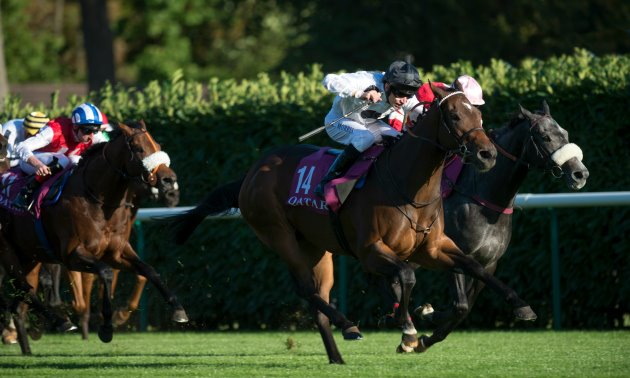
The lists for both races are a who’s who of racing royalty, but there is still hope for those wanting to buy the next hot prospect without incurring the bank manager’s wrath. The third and final Group 1 of the Ebor Festival, the Nunthorpe Stakes, now has a prize fund of £350,000, but the roll of honour over the last decade features a dual winner, Borderlescott, who was bought by trainer Robin Bastiman for just 13,000 guineas as a yearling. Sole Power, who won the Nunthorpe in both 2010 and 2014, cost trainer Eddie Lynam £32,000, while Michael Dods only had to go to 16,000 guineas for his back-to-back winner in 2015 and 2016, Mecca’s Angel.

The most recent winner of the Nunthorpe, Marsha, has never been through the sales ring, but the story of her owner/breeder is still far removed from that of Messrs Magnier, Tabor and Smith. The Elite Racing Club, which is approaching its 25th anniversary this year, describes itself as “the very best value in British Horseracing today”, and that is hard to dispute given that it costs just £199 a year to be involved in a syndicate that has been involved with numerous big race winners since it was set up by Tony Hill in 1992, including eight Group 1 successes by three individual horses.
Ribbons, who won the Prix Jean Romanet in 2014, was the Elite Racing Club’s most recent Group 1 winner prior to Marsha’s victories in the 2016 Prix de la’Abbaye and last week’s Nunthorpe, but the high-class Soviet Song was the horse who really put the syndicate on the map. Trained - like Ribbons - by James Fanshawe, she won the Fillies’ Mile in 2002, the Falmouth, Sussex and Matron Stakes in 2004, and the Falmouth again in 2005. As Dan Downie, the club’s racing manager, recently explained: “Soviet Song was like a dream and she won five Group Ones for us at a time when there very few racing clubs or syndicates around, so we became the pioneers.”
The Elite Racing Club is also different to most racing syndicates in that it has its own breeding programme, too, and part of the appeal for members is that they can follow their horse’s progress all the way from birth to their first steps on the racecourse. Soviet Song, Ribbons and Marsha were homebred and can all be traced back to Kalinka, who was purchased by trainer Paul Cole for the Elite Racing Club for 23,000 guineas in 1996, and later became the foundation mare at their Kirtlington Stud in Oxfordshire. As the essay on Marsha in Racehorses of 2016 outlined:
“Kalinka’s second foal was Soviet Song, and she would also produce the 2005 Triumph Hurdle winner Penzance and the fairly useful mile winner Sister Act, who is the dam of Ribbons, as well as the winners in the latest season Goldmember (three-year-old) and Tribute Act (two-year-old). Karlinka died in 2014 but she left a clutch of her daughters among the Elite Racing Club broodmare band, including her first foal Baralinka.”
It is through Baralinka that the connection to Marsha is made. Marlinka, Baralinka’s third foal and winner of three of her seven starts for Roger Charlton, produced Marsha following a visit to Acclamation in 2013, her second foal after an Iffraaj colt who was born the previous year. Now known as Judicial, he has developed into a smart performer for the Julie Camacho yard, and will attempt to make the breakthrough at listed level in Saturday’s Beverley Bullet. Joint top-rated with Alpha Delphini on weight-adjusted ratings, the five-year-old would appear to hold sound claims as he attempts to give the near-10,000 members of the Elite Racing Club further reason to smile.
Whatever the outcome in East Yorkshire, though, members of the syndicate have every reason to be happy with their lot in a climate where it is increasingly difficult to get true value for money from the ownership experience.


.jpg&w=300)
.png&w=300)