













 Radio
Radio




 Url copied to clipboard.

Only seven horses have won the Cheltenham Gold Cup more than once_Easter Hero, Golden Miller, Cottage Rake, Arkle, L’Escargot, Best Mate and Kauto Star. The chances of the outstanding Don Cossack joining that list suffered a blow when a tendon strain in his off-fore, sustained on the gallops, ruled him out of the Punchestown Festival, which took place shortly after the end of the British season. Don Cossack’s connections sounded more optimistic as the summer wore on about his making a full recovery but, at the time of his injury, it was thought that his career might be at an end. Since finishing the 2014/15 British season with a spectacular twenty-six-length thrashing of Cue Card in the Melling Chase at Aintree, Don Cossack has suffered only one defeat - when falling in the King George VI Chase in December - and has established himself as the best chaser in training. Indeed, if his luckless defeat when badly hampered in the Ryanair Chase at the 2015 Cheltenham Festival is ignored, Don Cossack has won his last ten completed starts (five at Grade 1 level) and has become very much the horse to beat in the top staying chases. He followed his Melling Chase win by putting the Cheltenham Gold Cup second and third, Djakadam and Road To Riches, to the sword in the Punchestown Gold Cup, which was run very early in the latest season. Strictly on a line through Djakadam and Road To Riches, Don Cossack would have won the 2015 Gold Cup had he run in it.
After his summer break, Don Cossack continued in similar fashion with two wide-margin wins in October, firstly in the Irish Daily Star Chase at Punchestown and then in the JNwine.com Champion Chase at Down Royal. The Punchestown race had been chosen as an early starting point for Don Cossack the previous year - British Champions’ Day and the Breeders’ Cup, two of the Flat’s big autumn `championship’ racedays, haven’t even taken place by then - and he had little more than a schooling session for his second win, beating stablemate Roi du Mee by twelve lengths. There was speculation at the time that Don Cossack’s connections might be tempted to aim him at British racing’s newly-announced Chase Triple Crown, for which Jockey Club Racecourses put up a million-pound bonus for any horse that could win the Betfair Chase at Haydock, the King George VI Chase at Kempton and the Cheltenham Gold Cup. However, it soon became clear that there were other plans in place, geared more specifically towards the Cheltenham Gold Cup this time. Don Cossack had been entered for steeplechasing’s blue riband the previous season but then, not long after Christmas, it had become clear that he had been earmarked for the Ryanair Chase, with Road To Riches, trained by Noel Meade, being Gigginstown’s number-one Gold Cup hope that year (the owners’ retained jockey Bryan Cooper still chose to ride Road To Riches in preference to Don Cossack in the Punchestown Gold Cup).
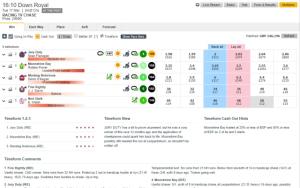
Like that of Road To Riches the previous year, Don Cossack’s big-race programme in the latest season effectively got under way in the Champion Chase at Down Royal, the first of Ireland’s four open Grade 1s for staying chasers, and he followed in the footsteps of Road To Riches by turning that event into a one-sided affair. Don Cossack won with any amount in hand, being eased right down to beat British challenger Rocky Creek by eight lengths, with Roi du Mee, the winner in 2013, finishing third this time, well ahead of the only other runner Texas Jack. Rocky Creek had also finished runner-up to Road To Riches, beaten eleven lengths, in the 2014 renewal. Whereas Road To Riches had then gone on to win the second of Ireland’s Grade 1s for staying chasers, the Lexus Chase at Leopardstown’s Christmas meeting, the bar for Don Cossack in the latest season was set a little higher and he was sent instead to Kempton for Britain’s mid-season championship, the King George VI Chase. Gigginstown House Stud had a rich array of chasing talent at its disposal in the latest season and the Lexus became the target instead for the owners’ other principal Cheltenham Gold Cup hope Don Poli, while Road To Riches moved down the pecking order and got his campaign off the mark in the Clonmel Oil Chase in November before eventually going on to represent the `maroon cavalry’ (Gigginstown’s maroon, white star and armlets has become very familiar in recent times to British as well as Irish racegoers) in the Ryanair Chase, which is sponsored by Michael O’Leary, whose horses run under the Gigginstown House Stud banner (O’Leary has yet to win his own race at the Festival).
Don Cossack could still be backed at 8/1 for the Cheltenham Gold Cup after his victory in the Champion Chase at Down Royal, perhaps illustrating his trainer’s feeling at the time that the horse wasn’t receiving the wider credit he deserved for his impressive sequence of performances. His appearance in the line-up for a tremendous renewal of the King George VI Chase provided an opportunity for Don Cossack to pass the sternest test he had been set in his career up to that time, an even sterner test than the one he had come through so impressively in the Punchestown Gold Cup. Cue Card was back in top form, having won the Charlie Hall Chase at Wetherby and the first of Britain’s open Grade 1s for staying chasers, the Betfair Chase at Haydock. The top chaser in the Willie Mullins stable, Vautour, was also in the King George line-up, having been warmed up in the 1965 Chase at Ascot on Betfair Chase day. Don Cossack started a well-backed 15/8 favourite, shortening on the day, ahead of that pair, with Silviniaco Conti, winner of the King George in the two previous years, and the spectacular Hennessy Gold Cup winner Smad Place the only others in the field to start at single-figure odds. Had he stood up, instead of falling at the second last when looking a big danger to Vautour and Cue Card, it is likely that Don Cossack would have run to a Timeform rating of 180 or more. Cue Card and Vautour were separated by a head at the end of an attritional running which tested the stamina, jumping and resolve of the principals to the full. Both ran to 180 - the patiently-ridden Al Ferof kept on for third for the second year running and was thirteen lengths further behind - which puts the latest King George VI Chase among the highest quality renewals in the race’s long history.Don Cossack was rallying strongly at Kempton and, after being a length behind Cue Card three out, was just in front of him when he departed at the next. A study of the sectional times for the race shows that Don Cossack, who had been under pressure from the home turn, was the fastest horse in what was one of the fastest parts of the race, and those who concluded that tiredness contributed to his fall were wide of the mark. Don Cossack was keeping on very strongly at the time. The sectionals show that both Cue Card (who lost some momentum with a last-fence mistake) and Vautour slowed relatively noticeably, especially on the run-in, after Don Cossack’s fall, which provides further evidence that Don Cossack would, in all likelihood, have won. Had he finished the course and run to a rating of at least 180, it would have made the King George the first occasion since the 2004 Tingle Creek Chase (in which Moscow Flyer beat Azertyuiop and Well Chief) to have featured three performances of such high calibre in one race. The quality seemed generally to be underestimated at the time, with Vautour’s stablemates Djakadam (the other main Gold Cup hope of Vautour’s owner) and Don Poli maintaining their positions at the head of the ante-post betting on the Cheltenham Gold Cup immediately after the King George.

Don Cossack evidently wasn’t considered to need much time to get over his Kempton fall and he was out again in mid-January in the Ladbrokes Ireland Kinloch Brae Chase, a Grade 2 event over two and a half miles at Navan in which he had to concede weight to his three opponents, who included, in the same ownership, Wounded Warrior, having his first outing since finishing runner-up in the Champion Novices’ Chase at the Punchestown Festival. The veteran Rubi Light made the running at an ordinary pace and 8/1-on shot Don Cossack took a while to warm to his task, his lack of zest possibly a sign that his run in the King George, less than three weeks earlier, might have left a mark after all. Driven along after the third last to take the lead with two to jump, Don Cossack kept on well to win by nine and a half lengths, with plenty in hand, from Wounded Warrior, who stayed on to finish a length ahead of Rubi Light (the fourth runner Mount Colah would probably have finished second but for making a bad mistake and almost coming down two out). As in the previous season, Don Cossack didn’t run again after winning the Kinloch Brae until the Cheltenham Festival.
The Gold Cup picture changed a little when Djakadam fell in the Cotswold Chase at Cheltenham’s trials meeting at the end of January, which resulted in his being pushed out to a general 5/1 for the Gold Cup, longer odds than both Vautour and Don Cossack. Neither Vautour nor Cue Card was seen out between the King George and the Cheltenham Festival, and it was a similar story with Don Poli who went straight from the Lexus Chase to Cheltenham in March. The late switching of Vautour to the Ryanair Chase came as a shock to punters, and was a blow to the Gold Cup, with his owner having committed both him and Djakadam to the race in public pronouncements leading up to the Festival, but the small Gold Cup field (four runners from Britain, five from Ireland) was still a very strong one, though the absence of the long-since injured reigning champion Coneygree weakened the home defence. The four principals - Don Cossack (favourite at 9/4), Cue Card (5/2), Djakadam and Don Poli (both 9/2) - were joined by Smad Place, whose win in the Cotswold Chase had appeared to strengthen his claims, and by Carlingford Lough, who had won a second successive Irish Gold Cup, though both of those horses had been down the field in the 2015 Cheltenham Gold Cup. The increasingly enigmatic On His Own, fifth after chasing Coneygree for a long way twelve months earlier, was having his third crack at the race, after being narrowly beaten by Lord Windermere in 2014. The 2014 RSA Chase winner O’Faolains Boy, back after missing the 2014/15 season with injury, completed the line-up with his stablemate Irish Cavalier (Road To Riches, beaten into third by Vautour in the Ryanair the previous day, was a non-runner as expected, after being left in at the final declaration stage).
The Cheltenham Gold Cup had a new sponsor, with the telecoms company Timico stepping in after Betfred, which inherited the sponsorship when it acquired the Tote, became embroiled, along with other major bookmakers, in a stand-off over financial contributions to the sport from offshore online betting (there is more about the `authorised betting partner’ row in the essay on Sire de Grugy). As well as the Cheltenham Festival’s showpiece having a new sponsor (as did the World Hurdle, with Michael O’Leary stepping in when Ladbrokes became ineligible), racegoers were met with other, more tangible changes at the Cheltenham Festival, with a new £45m five-storey grandstand, the latest major development having been completed, on time and to budget, in November. An elevated, crescent-shaped walkway, overlooking the paddock and the winner’s circle, had also been completed to give racegoers more room, and to help the crowd flow from the paddock area to the main grandstands (the Festival programme also had an additional five minutes between races).
The absence of the name A. P. McCoy from the race card was another change the Festival crowd had to adjust to. Carlingford Lough had been the twenty-times champion’s final Cheltenham Gold Cup ride twelve months earlier and he had been in the saddle, in an unusual booking, when Don Cossack, with McCoy standing in for the suspended Bryan Cooper, had propelled himself to the top of the Timeform ratings that season in the Melling Chase at Aintree, a race that turned out to be McCoy’s final Grade 1 success. He was back at the latest Cheltenham Festival working, among other things, as a pundit for Channel 4, having become, on his retirement, only the second jockey, after twenty-six-times Flat champion Gordon Richards, to be knighted for services to racing.
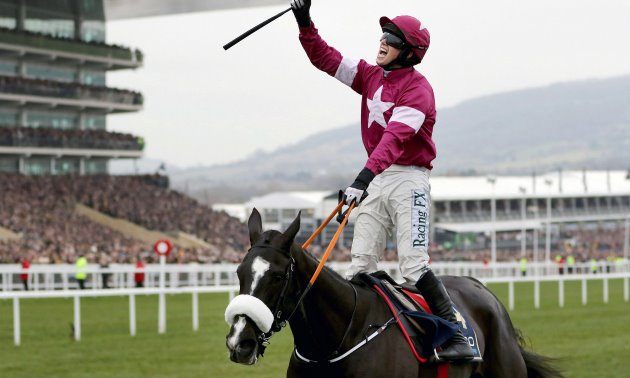
Gigginstown’s number-one Bryan Cooper rode Don Cossack in all his races in the main part of the latest season, though he claimed to have found it difficult to choose between him and Don Poli for the Gold Cup. Cooper rode Don Poli in a public schooling session at Leopardstown in mid-February, but later in the same session partnered No More Heroes when schooling with Don Cossack who was ridden by Davy Russell. Don Cossack was evidently tried in cheekpieces on the gallops after his rather laboured performance in the Kinloch Brae Chase, and was said to have `flown’, but he was not equipped with them at Cheltenham (See More Business was the last Gold Cup winner in headgear), where he cemented his status in a truly-run race, though the pace was not quite so searching as the year before, with a performance that was very hard to fault. Smad Place and O’Faolains Boy cut out much of the running but underfoot conditions - the going was good - were much different to those under which Smad Place had excelled in the Hennessy and the Cotswold Chase and he again failed to do himself justice in the Gold Cup. O’Faolains Boy still led approaching the fifth last where Djakadam, going strongly, jumped past him on the inside, with Don Cossack also travelling well and almost upsides on the outside of that pair, as Cue Card moved through on to their heels, with Smad Place beginning to drop away. Don Poli and Carlingford Lough came next, but they were a further eight to ten lengths behind. Don Cossack lost a little ground when he pecked on landing over the fourth last, but he was soon right back on terms after Cooper urged him along for a few strides. Djakadam, Don Cossack and the improving Cue Card, moving up between the two leaders on the run to the third last, looked set to fight it out but the unfortunate Cue Card suffered a rare jumping lapse, barely taking off and coming down, ending his hopes of landing the million for the new Chase Triple Crown. Don Cossack asserted himself rounding the home turn, where he shook off Djakadam to jump the second last with a three-length advantage. A couple of smacks with the whip between the second last and the final fence, and a third early on the run-in, was all that was needed to maintain Don Cossack’s advantage. Just straightened by Cooper as he seemed to idle for a stride or two after the last, perhaps shaping to go round again as he passed the temporary running rail that prevents runners from going out on another circuit, Don Cossack had only to be pushed along to beat the persistent Djakadam by four and a half lengths, a margin that could almost certainly have been extended had Cooper wished. Don Poli finished a further ten lengths behind Djakadam to give Gigginstown first and third, though Don Poli never looked like being a threat to the first two after having plenty to do when the race began in earnest as the pace was stepped up around five fences from the finish. Carlingford Lough made it into the frame almost on the line, catching Irish Cavalier who faded on the run-in after moving into a never-dangerous fourth between the last two. Smad Place, O’Faolains Boy (who shaped much better than his finishing position) and On His Own brought up the rear. The questions were posed about where Cue Card might have finished, just as they had been after Don Cossack’s fall in the King George, but, in contrast to the King George, the two who fought out the Gold Cup finish saw the race out very strongly. Cue Card would certainly have been involved in the finish had he not fallen, though it must be doubted whether he would have been able to stay with Don Cossack up Cheltenham’s punishing final climb.
The latest Gold Cup was dominated by horses owned by the sport’s most powerful owners, with the first four places taken by Irish-trained horses, the first time that has happened in the history of the race. The only other occasion that overseas challengers have filled all four berths in the frame was in 2006 when War of Attrition, Hedgehunter and Forget The Past completed an Irish one, two, three, with French-trained L’Ami fourth. War of Attrition is the other Cheltenham Gold Cup winner to have carried the Gigginstown House Stud colours. When Michael O’Leary was asked that day to explain the Irish domination, he replied: `It’s because we’re keeping all the good horses at home and selling you guys all the rubbish.’ The Irish domination of the latest Gold Cup wasn’t so newsworthy. Ireland now has some very rich owners - as well as the Gigginstown pair, Don Cossack and Don Poli, the two others in the frame, Djakadam and Carlingford Lough, ran for Susannah Ricci and J. P. McManus respectively. With Rich and Susannah Ricci, J. P. McManus and Gigginstown House Stud among those with large strings in Ireland, it is not just that country’s best horses that are being retained, but the major Irish strings are also being supplemented by the pick of the horses with potential that are available from France. Irish jumping has never enjoyed such strength in depth as it does at the moment, as illustrated by the fact that Gigginstown House Stud, J. P. McManus and Mrs Ricci - in that order - filled the first three places in the owners’ tables in both Ireland and Britain in the latest season, when Willie Mullins came within a whisker of lifting the `official’ trainers’ championship in Britain, which would have made him the first Irish-based trainer to do so since Vincent O’Brien in 1952/3 and 1953/4. O’Brien’s achievements over jumps in Britain included three successive Grand Nationals (1953, 1954 and 1955), four Gold Cups (1948, 1949, 1950 and 1953) and three Champion Hurdles (1949, 1950 and 1951), before he turned his attention to the Flat in the late-’fifties.
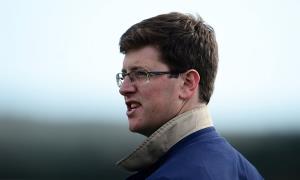
Willie Mullins trains all the top horses owned by the Riccis but, like J. P. McManus, Gigginstown has its horses spread around a number of trainers, though all its horses are trained in Ireland. Don Cossack’s trainer Gordon Elliott is one of Gigginstown’s principal trainers and was again the clear runner-up to Willie Mullins in Ireland. Don Cossack is the first runner Elliott has had in the Cheltenham Gold Cup and he also enjoyed the distinction of winning the Grand National (with Silver Birch in 2007) with his first runner in that race too. Along with Michael `Mouse’ Morris, who trained War of Attrition and also won the latest Grand National for Gigginstown with Rule The World, Gordon Elliott added his name in the latest season to a very select list of Irish-based trainers who have won both the Gold Cup and the Grand National. Apart from Vincent O’Brien, L’Escargot’s trainer Dan Moore was the only other Irish trainer to have won both races before the latest season (L’Escargot won the Gold Cup in 1970 and 1971, and the National in 1975). Gigginstown House Stud’s string is not quite on the scale of that of J. P. McManus, the sport’s biggest owner, but it is the second largest jumping string by some way (one hundred and seventy individual horses ran for the operation in the latest season). Young chasing types, who typically need time to mature, have always been the focus of Gigginstown’s recruitment policy and Irish point-to-points have regularly been used to introduce such recruits to racing. Gordon Elliott was first approached to take some of the Gigginstown youngsters for pointing the year after he won the Grand National. The catch was that the trainer wouldn’t keep any of the horses when they went to the track, but, says Elliott, `I tried to forget their names and just remember that I was getting very well paid … without that money I wouldn’t have been able to build all that I have at Cullentra House now [130 boxes, two gallops, three schooling areas, two outdoor arenas, four walkers, a modern vets’ box and extensive paddocks].’ Michael O’Leary seems happy for the time being with the returns on the millions he spends, though he did joke about `retiring’ after Gigginstown’s latest stellar season, before putting minds at rest by adding `but I’m hardly going to take up sailing or anything.’ O’Leary became the first owner to win the Gold Cup and the Grand National in the same season with different horses (Dorothy Paget won both with Golden Miller), but he knows the score, as he explains: `The attrition rate in jumping means you buy ten and you might get one good one and then the question is whether the good one is good enough to be a potential Grade 1 winner, then whether he might be good enough to go to Cheltenham and, finally, could he be a Gold Cup horse? I know what I’m getting into and I’m comfortable with it. I like the good days and that’s why I’m involved.’
Don Cossack himself wasn’t among the Gigginstown recruits given experience in points. He was recruited privately after finishing fifth of twenty-four in the four-year-old bumper at the Punchestown Festival, before which he had been offered to Gigginstown by his first trainer Eddie Hales with the recommendation that he was `the best horse I have laid my hands on.’ After winning three bumpers for Gordon Elliott and being named `best bumper performer’ in Chasers & Hurdlers 2011/12, Don Cossack looked set for a big future over jumps. He took a little while to get there_just useful as a novice hurdler and then successful twice in seven outings, mostly in good company, as a novice chaser (he fell in the RSA Chase at Cheltenham)_but, as his trainer has said, he was only `a shell of a horse’ to start with. He steadily matured into a big, good-looking individual who has really looked the part over the last two seasons. The pedigree of German-bred Don Cossack has been fully covered in earlier editions of Chasers & Hurdlers. His sire Sholokhov was a very smart performer on his day, finishing runner-up in the Irish Derby and the Eclipse for Aidan O’Brien, and, after initially being sold to continue racing for Gary Tanaka, he eventually found a home at stud in Germany, where he made his debut at a fee of just €5,000 in 2004. Sholokhov now stands at Glenview Stud in Ireland, where he has been since 2013, serving large books. The latest Cheltenham Festival was a particularly good one for the Glenview stallions, with Shirocco responsible for Champion Hurdle winner Annie Power, as well as Minella Rocco, Robin des Champs responsible for two other winners in Vautour and Un Temps Pour Tout, and the Glenview stalwart Presenting being represented by Yorkhill.
Don Cossack is the tenth and final foal out of Depeche Toi, who won two races at around a mile and a quarter in Germany as a three-year-old. She bred a handful of ordinary winners before Don Cossack, including Dubai King (by Dashing Blade) who was successful at two miles over hurdles in Ireland. Don Cossack’s wider family on the distaff side has made its mark both in Germany and abroad. His grandam Diaspora was second in the German One Thousand Guineas and his great grandam Diu was a Preis der Diana winner who is also the fifth dam of Kentucky Derby and Dubai World Cup winner Animal Kingdom. Mostly a very good jumper of fences, who races prominently, Don Cossack stays three and a quarter miles well and acts on heavy and good to firm going. He wears a tongue tie. If it turns out that his chance of adding his name to the list of dual Cheltenham Gold Cup winners has gone, he at least has the distinction of joining Night Nurse, Monksfield, Dawn Run, Desert Orchid, Istabraq, Moscow Flyer and Kauto Star on a very select list who have been Timeform Horse of the Year over the jumps more than once in the Chasers & Hurdlers era. That he stood out in a vintage season like the latest one is a fine testament to him.
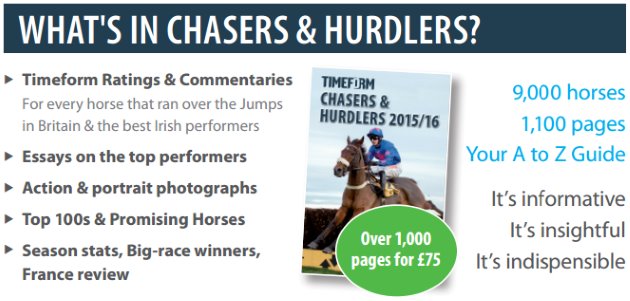
Click here to buy the latest edition of Chasers & Hurdlers
.jpg&w=300)
.png&w=300)