














 Radio
Radio




 Url copied to clipboard.

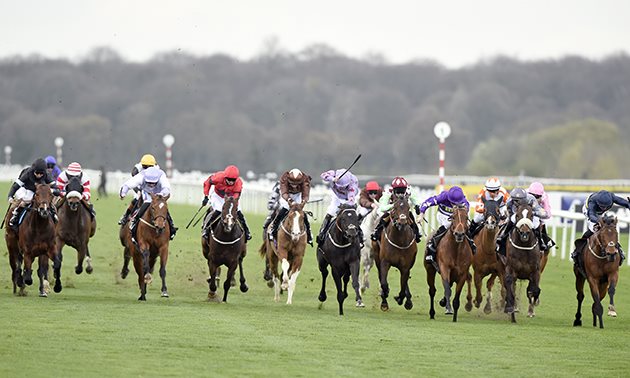
The start of the Flat turf season in Britain at Doncaster on Saturday means it’s also the traditional first race of the year for two-year-olds. The Brocklesby Stakes is therefore a clean slate from a form point of view, so other factors, including the pedigrees of the runners, take precedence.
Let’s look first at the last ten runnings of the Brocklesby (between 2010 and 2018 - the race was split into two divisions in 2017) to build a profile of a typical winner.
Sire and dam
Not surprisingly, most Brocklesby winners are by sires who were pattern winners at two, though that’s almost a prerequisite for a commercial stallion these days. Bahamian Bounty, for example, who sired two of the last ten winners, Mick’s Yer Man (2013) and Ravenhoe (2015), won the Prix Morny and Middle Park Stakes at two. There’s a bit more variety among the dams of Brocklesby winners. Only four of the ten were out of mares who had won a race; another four were out of maidens, while the other two were out of unraced mares, though Mick Yer Man’s dam was an unraced daughter of a Queen Mary winner. The four winning mares to have produced Brocklesby winners were all sprinters, and three of those had themselves been successful as two-year-olds. Mala Mala, dam of 2016 winner The Last Lion, didn’t win at two but she was highly tried in three starts, finishing third in the Moyglare Stud Stakes and Cheveley Park.
WATCH: Brocklesby winner The Last Lion causes a 25-1 upset in the Middle Park to beat Blue Point and Mehmas. pic.twitter.com/gkwMoU0ZN9
— Racing TV (@RacingTV) 24 September 2016
Sale Price
Seven of the ten winners had been sold as yearlings and they fetched a range of prices. Last year’s winner Izzer was a bargain buy by Brocklesby standards at just 11,000 guineas, while at the other end of the scale The Last Lion had fetched €82,000 and the 2010 winner Chiswick Bey £90,000.
Foaling Date
This looks an important factor because nine of the last ten Brocklesby winners had been foaled no later than March. The exception was Requinto Dawn who won a division of the 2017 race. He was an April foal and therefore alone among the last ten Brocklesby winners in not having reached his second birthday. The other winners were spread between January (one), February (five) and March (three).
Trainer
It’s clear that certain trainers target the Brocklesby, with Richard Fahey, Bill Turner and Mark Johnston all successful twice in the last ten years. Fahey and Turner (six winners since 1996) have entries in this year’s race, as do Mick Channon and Declan Carroll who have both trained winners in recent seasons.
_racehorses_of_20182.png)
This year’s race
Twenty-five two-year-olds were entered for this year’s Brocklesby, though that number can be whittled down if we reject a) those that did not fetch a five-figure sum at auction and b) those yet to reach their second birthday by the day of the race (March 30th). These are three that make the most appeal on that criteria:
Kilham ticks plenty of boxes, with a February foaling date and from Declan Carroll’s stable which won a division of the Brocklesby two years ago with the ill-fated Santry who went on to finish second in the Norfolk Stakes at Royal Ascot. A 62,000 guinea yearling, he’s among the most expensive of these as might be expected of a colt by Pivotal out of an Invincible Spirit mare. His dam Russian Heroine won a couple of six-furlong handicaps for Sir Michael Stoute in the Cheveley Park Stud colours and was a daughter of the same connections’ 1000 Guineas winner Russian Rhythm who had been a smart two-year-old herself, winning the Princess Margaret and Lowther Stakes.
Richard RHB is by first-season sire Fulbright who proved smart at up to a mile but was a sharp two-year-old, winning twice before Royal Ascot, including the Woodcote at Epsom. Trained by David Loughnane, Richard RHB was bought for £22,000 as a yearling and as a late-March foal just about qualifies by foaling date. Although his dam is by King’s Theatre, best known as a sire of jumpers, she has produced the likes of useful winner up to seven furlongs Yeah Baby Yeah (listed-placed over five furlongs at two) and Inzone and Intermath who were both winning sprinters at two.
March foal Victochop was a French yearling purchase by trainer George Baker for €22,000. His dam won six races at up to seven furlongs in France, two of them as a two-year-old, and her best form was verging on useful. Victochop’s sire Captain Chop (by Mill Reef Stakes winner Indian Rocket) is yet to have a runner in Britain, but he’s had some speedy winners in France where he was a useful and precocious two-year-old himself, winning the French equivalent of the Brocklesby, the Prix du Debut at Saint-Cloud.
_(002)4.jpg)

.jpg&w=300)
.png&w=300)