














 Radio
Radio




 Url copied to clipboard.

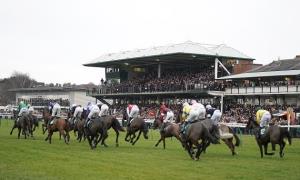
The Shergar Cup is now firmly rooted in the racing calendar, both in terms of venue and date, and its format is pretty well established now too. With attendances of 30,000, it has become a popular event as something of a one-off in the fixture list, but the meeting in its current guise has evolved a fair bit from the inaugural Shergar Cup day in 1999 which was not without its critics.
For a start, that first Shergar Cup took place not at Ascot but at Goodwood, and was held in early May on the same day as the Lingfield Derby Trial. The event took its name from the 1981 Derby winner (subject of this Blast From The Past) owned by the Aga Khan who was the original sponsor of the Shergar Cup and donator of the trophy which goes to the winning team.
The ‘team’ concept – along the lines of golf’s Ryder Cup - was intended to broaden racing’s appeal, though rather than a competition between jockeys as it has become today, the original Shergar Cup pitted two sets of owners against each other. ‘The stars of the desert taking on the pride of Europe’ was how the competition between the Middle East and Europe was marketed, the teams captained respectively by Sheikh Mohammed and Robert Sangster.
Timeform was sceptical that this format would succeed in firing the public’s imagination, whether or not they were already followers of racing. ‘In any race, fans and punters give interest and loyalty to individual horses, and most of the time it matters not one iota where they come from or who owns them…it will be irrelevant to the logical punter whether the horse concerned belongs to a saint or a serial killer.’
The high cost of admission (and disappointing attendance) was another criticism levelled at the inaugural Shergar Cup meeting but, for all its teething troubles, nobody could quibble with the amount of prize money on offer or the quality of the horses on show. Each of the first four races on the card was worth £25,000 to the winner and the last two £50,000 apiece. The Middle East led going into the final event after Saeed bin Suroor and Godolphin had completed a treble, but Europe struck back in the ‘Classic’ in which the John Gosden-trained Handsome Ridge (owned by England footballer David Platt) led home a European 1-2-3 to take the trophy.
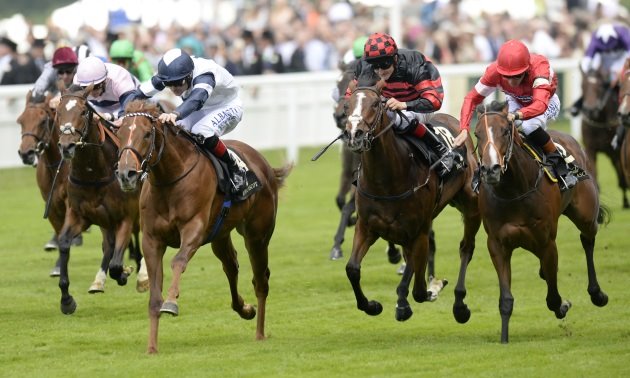
However, the best performance on the card came in the ‘Dubai Sports Shergar Cup Seven’, a level-weights contest over seven furlongs for older horses won by Godolphin’s Diktat who was Frankie Dettori’s second winner on the day. Diktat had won the Jersey Stakes at Royal Ascot in Sheikh Mohammed’s colours the year before and he was making his reappearance at Goodwood.
‘Diktat put up an impressive display in his race’ said Racehorses, ‘producing an excellent turn of foot to get out of trouble in the closing stages and beat Russian Revival a shade cosily by half a length.’ Diktat’s speed made him as effective at six furlongs as seven and he went on to become the best older sprinter in Europe that season (rated 126), registering Group 1 wins in the Prix Maurice de Gheest at Deauville and the Sprint Cup at Haydock.


.jpg&w=300)
.png&w=300)