














 Radio
Radio




 Url copied to clipboard.

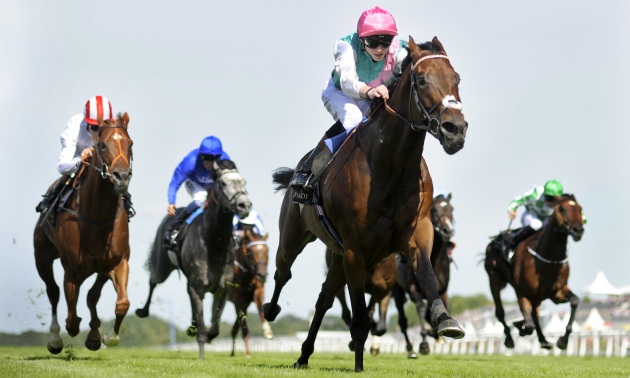
The Oaks and Irish Oaks winner Enable heads the betting for Saturday’s King George in which she would be bidding to give her owner Khalid Abdullah a second win in the race more than thirty years after his outstanding three-year-old colt Dancing Brave was successful in 1986.
Dancing Brave went to Ascot as the winner of six of his seven starts which included the 2000 Guineas and Eclipse Stakes. His only defeat beforehand, arguably more famously, had come in the Derby which he should also have won, having been left with too much ground to make up on the Dante winner Shahrastani who held on to his diminishing lead to win by half a length.
While Dancing Brave had resumed winning ways at Sandown, beating the four-year-old filly Triptych with an exceptional time performance, Shahrastani had followed up his Epsom success with an eight-length romp in the Irish Derby, before their paths crossed a second time in the King George which was naturally billed as a showdown between the pair of top-class three-year-olds as Racehorses recounted:
‘There was an air of settling unfinished business about the King George which caught the imagination of the racing public. A barrage of money came for both Shahrastani and Dancing Brave – the only three-year-olds in the field – who were backed almost to the exclusion of the rest in the heaviest on-course betting on a King George for years. Shahrastani started at 11/10 and Dancing Brave at 6/4.’

Their notable older rivals in a field of nine were the French-trained Triptych, the previous year’s winner Petoski and the Princess of Wales’s Stakes winner Shardari, the last-named, like Shahrastani, representing the Aga Khan and Michael Stoute. Racehorses describes how things unfolded:
‘The expected duel between Shahrastani and Dancing Brave didn’t happen. Shahrastani, sweating and edgy and a little reluctant to go into the stalls, ran well below form. Dancing Brave, by contrast, looked a picture and gave another tip-top performance after moving down to post like a horse on top of the world. Patiently ridden in a strongly-run race, Dancing Brave quickly cut through the field in the home straight and was clearly in command a furlong and a half out. Eddery, a replacement for the injured [Greville] Starkey, looked across at the hard-working riders on Shahrastani and Shardari before sending Dancing Brave for home in earnest entering the final furlong. But after Dancing Brave went two lengths up Shardari fought back tigerishly and Dancing Brave had to be strongly ridden to hold him off by three quarters of a length with Triptych, putting in her best work at the finish, four lengths back in third and the flagging Shahrastani a well-beaten fourth.’
Pat Eddery had also won the King George on another Derby winner, Grundy, thirteen years earlier in that epic encounter with the year-older Bustino. Eleven-times champion Eddery, who died in 2015, is commemorated in the title of the listed race for two-year-olds which follows the King George.
Eddery kept the ride on Dancing Brave when he ran out a brilliant winner of the Prix de l’Arc de Triomphe later in the year in which Triptych, Shardari and Shahrastani all finished behind him again. All three of those rivals were top-class horses in their own right – Shardari beat Triptych in the International at York later in the summer, while the ultra-tough Triptych won the Champion Stakes after finishing third in the Arc – but Dancing Brave was a cut above them, his Timeform rating of 140 putting him in a very select group of horses to have achieved that level.

.jpg&w=300)
.png&w=300)