














 Radio
Radio




 Url copied to clipboard.

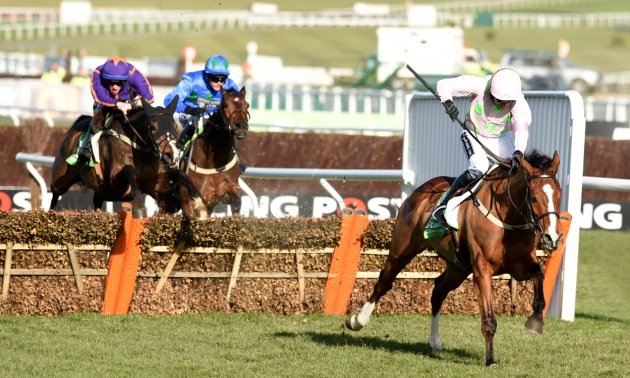
We’ve been here before, on this weekend, with big horses putting big reputations on the line by virtue of that big first step off a big lay-off. Big Buck’s came into the 2014 Cleeve off a 420-day absence, and Sprinter Sacre reappeared after 13 months on the sidelines in the 2015 Clarence House, a race rearranged this year for a brilliantly bloated day at Cheltenham.
Clarence House contender Uxizandre, having his first start since a McCoy-motivated mission in the 2015 Ryanair, might be the subject of a comeback case study under ordinary circumstances, but there’s an extraordinary horse taking precedence in the rehabilitation race this weekend, and his extraordinary trainer raises hopes and expectations of a full-on recovery, so says the data.

Rewind 12 months and Faugheen had pushed his way into the top ten hurdlers of all time, or at least all of Timeform’s time rating jumpers, with about as perfect a performance as it gets in the Irish Champion Hurdle, so powerful that day at Leopardstown that he made Grade 1-winning rivals look like handicappers. But that was then and this is now, a sore suspensory having left us in suspense, until Sunday.
Investigations undertaken previously by Timeform’s data diamond miner Michael Williamson (@RacingMDWilly), relating to Big Buck’s and Sprinter Sacre, but brought up to date for this inspection, show in stark terms the impact of absence on performance: the longer the absence, the lower the RTF (run to form) ratio, as can be seen below.

Though less pronounced, due to the overriding effect of a lay-off, the usual influences on performance remain, from the suitability of conditions to the form of the trainer. But, in this instance, more meaningful than the current form of the trainer is their track record with horses returning from an extended absence, and this is the less-is-more factor for the prospect of a fully-fuelled Faugheen: less fear, more faith.
In short, Willie Mullins is the best exponent of the art of getting a horse to pick up where it left off, following a sustained spell on the sidelines, treated in this study as 275 days or more, a point at which an absence moves into non-routine territory, encompassing strains and setbacks. He’s at the top of the following list of trainers with at least 50 hurdling qualifiers:

In Mullins’ case, of course, the trainer’s record-related reputation speaks for itself, and it’s hardly a surprise that he has the highest RTF% with all runners, but the final column is revealing, with little discrepancy (compared to most) between his RTF strike-rates with and without extended absences, the marginal difference bettered only by Evan Williams and Jonjo O’Neill, who deal more in handicappers and benefit to some extent from the slippage allowance.
Mullins, essentially, is out on his own when it comes to bringing one back with a bang.
Of the 68 good-quality hurdlers (Timeform rated 155+) in the last two decades who’ve faced a similar scenario, making overdue returns, only 12 of them ran to within 5 lb of their old rating on their first start back. But, overall, a far higher proportion of classy horses, compared to moderate ones, rediscover their peak after an unconventional absence, at least eventually.
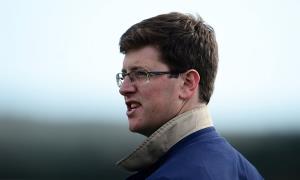
‘It will be very hard for Faugheen to run up to his mark on Sunday.’ Maybe so, but the man who said that is the same man whose recovery record means Faugheen’s return on Sunday can be viewed more in expectation than hope.


.jpg&w=300)
.png&w=300)